👉 Learn how to build AI systems for medical imaging domain by leveraging tools and techniques that I share with you! | 💡 The newsletter is read by people from: Nvidia, Baker Hughes, Harvard, NYU, Columbia University, University of Toronto and more!
Medical imaging expert told me this
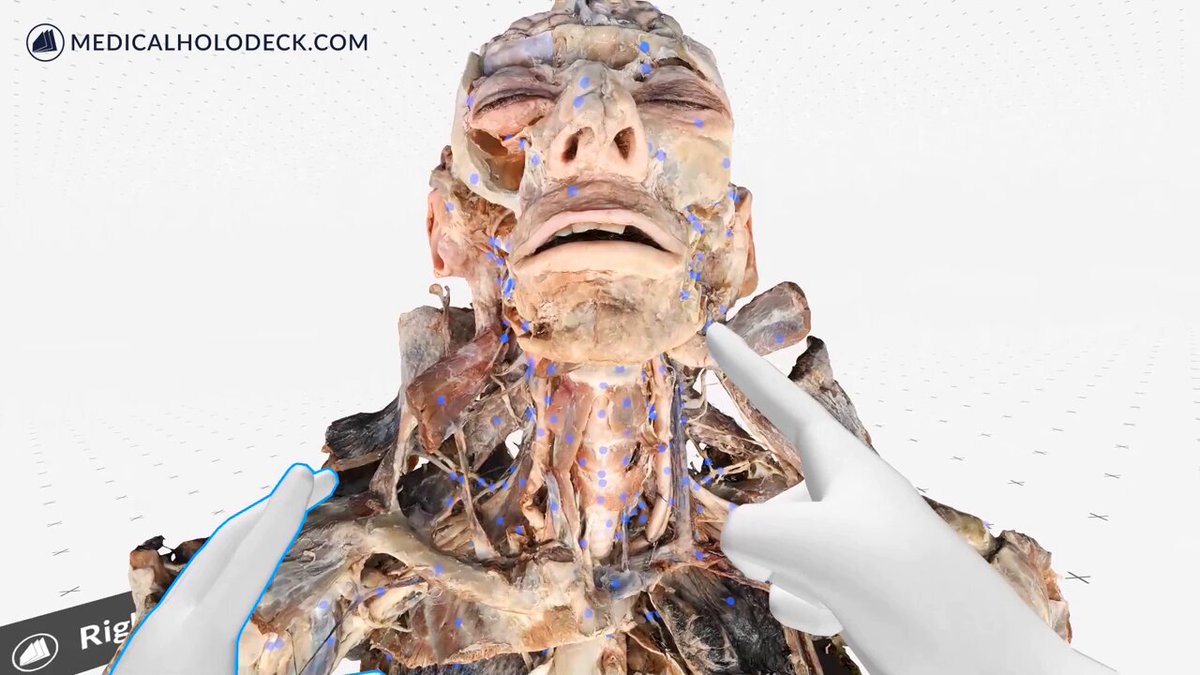
A Medical Imaging Expert Told Me ThisRecently I saw a post on LinkedIn where a medical imaging expert showcased his work of segmenting the lungs and its bronchial trees. You can see a screenshot of his work below ↓ To do this, he used 3D Slicer to automatically get the segmentation of the lungs and lobes. He then manually did the segmentation of the bronchial tree (the tree like structure in the previous image). I reached out to him and asked him how long did it take him to do this. He told me it took him 3 hours!! Can you imagine this? 3 hours for one CT or MRI scan! He also told me that he was aspiring to be able to do 50 of these per MONTH! Now, why am I sharing this with you? Because this is a use case where there is clear, straightforward and incredible value that AI can bring to the table. AI can easily cut down the time by several orders. I am saying this from experience. In fact, we worked on a similar use case with a client of ours at PYCAD, where we built an automatic segmentation model for the liver and its blood vessels. We were able to get the time required to do the segmentation from around 3 hours all the way down to 4 minutes + extra time to do minor touches. Now, to be completely frank, AI is still not as accurate as a human expert. Hence the need to do minor touches by an expert. However, the gap between AI and the human expert is shrinking at an exponential rate. A few years from now, AI will be able to do this completely on its own. Truly exciting! X Post of the Day!AR/VR is taking medical imaging by storm!
That's it for this week's edition, I hope you enjoyed it! |

Machine Learning for Medical Imaging
👉 Learn how to build AI systems for medical imaging domain by leveraging tools and techniques that I share with you! | 💡 The newsletter is read by people from: Nvidia, Baker Hughes, Harvard, NYU, Columbia University, University of Toronto and more!
Hello Reader, Welcome to another edition of PYCAD newsletter where we cover interesting topics in Machine Learning and Computer Vision applied to Medical Imaging. The goal of this newsletter is to help you stay up-to-date and learn important concepts in this amazing field! I've got some cool insights for you below ↓ What We Learned This Year (Medical Imaging Edition) As this year wraps up, I wanted to share a few quick lessons from the projects we worked on, especially around building web...
Hello Reader, Welcome to another edition of PYCAD newsletter where we cover interesting topics in Machine Learning and Computer Vision applied to Medical Imaging. The goal of this newsletter is to help you stay up-to-date and learn important concepts in this amazing field! I've got some cool insights for you below ↓ Zoom That Works Everywhere If you can’t zoom any pane in your web DICOM viewer, you’re doing extra work for no reason. Think of it like this: when something is small, you bring it...
Hello Reader, Welcome to another edition of PYCAD newsletter where we cover interesting topics in Machine Learning and Computer Vision applied to Medical Imaging. The goal of this newsletter is to help you stay up-to-date and learn important concepts in this amazing field! I've got some cool insights for you below ↓ A Quick Look at Our Volume Measurement Tool One of the tools we’ve been working on is a simple way to estimate 3D volumes directly inside the viewer. You start by drawing a...